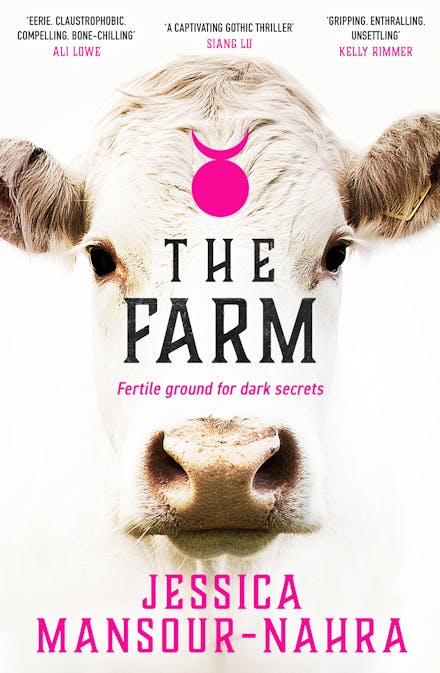
When 37-year-old Leila suffers a health tragedy, she doesn’t recover as quickly as she expected. Her partner, James, suggests a year away from the city – they’ll stay on his family farm, where the wide, open spaces and clean country air will help her come to terms with her grief.
But the property is remote and the house oppressive. Leila is disturbed by strange noises, fleeting visions and intrusive dreams. James worries that her medication is causing hallucinations.
As Leila’s isolation grows amid the haunted landscape, so does her suspicion that she isn’t the first woman James has relocated to the farm. Is what she’s experiencing real? Or is it all in her head?
Review
The Farm delivers in spades on its premise as a psychological thriller. It is eerie and tense, with the unsteadying sense that you can’t trust anyone – maybe not your handsome psychologist boyfriend, or even yourself.
At this point, when I’m reading books of certain genres and there’s a character who is a psychiatrist/psychologist/therapist, I am instantly suspicious of both the character and how the writer would depict the ethics of the profession. In The Farm‘s case, I liked that James’ profession adds an element of tension to the story: if your psychologist boyfriend is telling you that you’re not well, that certain things are good for your mental health, and that you’re hallucinating, surely he’s correct?
Jessica Mansour-Nahra’s evocative writing is a real strength: it locates you squarely in the rural Australian setting, and the tension is so palpable, I felt unsettled the whole time I was reading it. It is not for everyone: if you are picking up this book, be mindful that there are confronting scenes. It is not difficult to guess what Leila’s ‘health tragedy’ is; while I thought it was handled well, it was still hard to read. There are also scenes involving animal deaths. I was reminded why I’m not great at reading thriller: though I was very curious about the plot, it took me a long time to finish the book. I kept putting it down for a break because I found some of the scenes a bit much.
A prominent theme of the book is a woman’s body: the book is structured into parts based on phases of a menstrual cycle, and the plot examines Leila’s experience with and autonomy of her body. The book is frank about Leila’s miscarriage, the physical and emotional pain that lingers afterwards, and the ways Leila copes with that pain. Her partner, James, appears loving, but his eagerness to try again for another pregnancy is tinged with an overlooking of Leila’s wishes and needs.
I enjoyed the way Leila’s difficult experiences with her mother during her childhood were weaved into the story. It was interesting to see how they shaped her, and how she may still be dealing with the grief and trauma from those experiences. Although we spend the entire book in Leila’s perspective, I thought these descriptions were the most compelling insight we have into her psychology.
I wished more space was given to the final act. Most of the book is tightly paced, and the action-packed climax and ending felt rushed in comparison.
Overall, The Farm is a great read for readers seeking an eerie, suspenseful psychological thriller and appreciate themes of women’s autonomy.
Thank you to Hachette Australia who provided a copy of the novel in exchange for a review.
Review by Priscilla
Has Novel Feelings entertained you, or taught you something? Show your support with a once-off donation by buying us a coffee. All proceeds go towards making the show stronger and more sustainable for the future.
 Novel Feelings