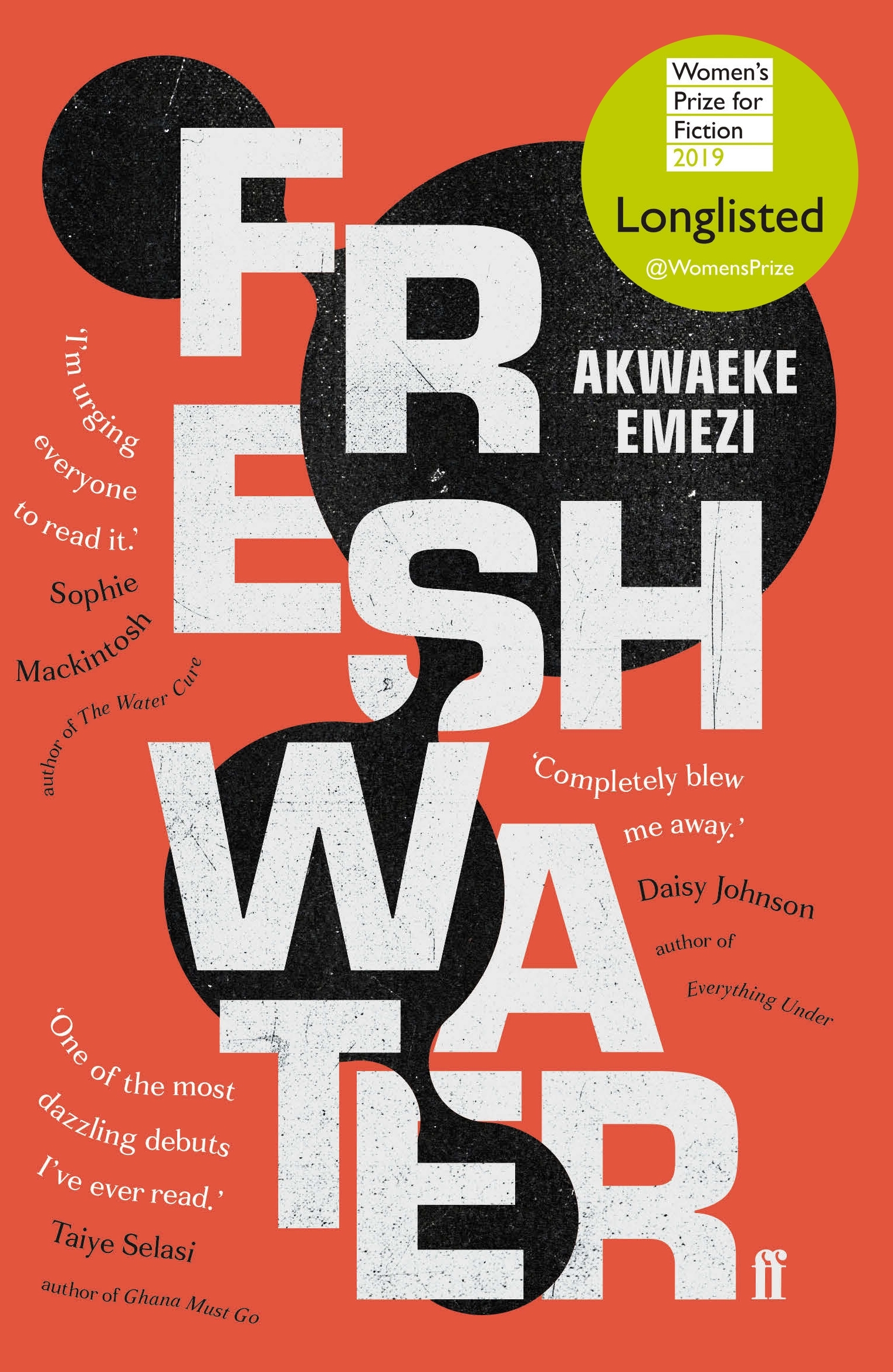
Ada carries separate selves within her. When a traumatic experience crystallises the selves into something more powerful, Ada’s life shifts in a dangerous direction.
Our September October book club discussion is about Freshwater, a semi-autobiographical novel by Nigerian writer, Akwaeke Emezi. We talk about multiplicity and the character’s experience with alters, and the role of trauma in the development of multiplicity. We aimed to view the story through the lens that the author intended while acknowledging our Western understanding and training – hopefully we succeeded!
Content notes
Trauma (inc. sexual assault), gender identity, disordered eating, self-harm, suicide attempt, dissociation, Dissociative Identity Disorder
Buy the Book
Thank you to our book club partners, Amplify Bookstore, who are offering 10% off the book (or book club bundle) with the code NOVELFEELINGS10.
Listen to our review
Listen on Apple, Spotify, or your favourite pod player, or stream here.
Join the Conversation
Visit our Facebook community page to join in the conversation.
Detailed Show Notes
About the Book
Ada has always been unusual. Her parents prayed her into existence, but something must have gone awry. Their troubled child begins to develop separate selves and is prone to fits of anger and grief. When Ada grows up and heads to college in America, a traumatic event crystallises the selves into something more powerful. As she fades into the background of her own mind, these ‘alters’ — now protective, now hedonistic — take control, shifting her life in a dangerous direction.
About the Author

Akwaeke Emezi is a storyteller and visual artist centering radical possibilities and indigenous Black realities with the philosophy that re-indigenization is essential for liberation. Through their art practice, they explore embodiment, incarnation, and sacred rites, reflecting on the space between corporeality and the spirit world.
Born and raised in Nigeria, Emezi’s work spans literature, music, film, and visual art.
Our Thoughts
Ada’s experience of multiplicity in Freshwater is framed in the traditional Igbo religion, not the DSM-5 understanding of dissociation that we were taught about in our psychology training. Akwaeke Emezi has spoken in multiple interviews about how viewing this story through the Western framework of mental ill-health is to misunderstand it. With this in mind, we both found Freshwater thought-provoking and helped expand our understanding of multiplicity.
We enjoyed the characters, particularly seeing the dynamics between the selves and the role each of them plays in Ada’s life. We would have liked to see more of Ada’s life beyond her sexual and romantic relationships; we weren’t sure what she studied in college, for instance. We agreed that the timeline of the story was unclear at times. As readers, it was often confusing to not be able to follow how much time has passed sometimes. We wondered if this was intentional though, as having multiple selves may lead to timekeeping being quite challenging.
Book Club Discussion Questions
- What do you think of Freshwater overall? What were the parts that you enjoyed or found challenging?
- What was your understanding of multiplicity and/or Dissociative Identity Disorder prior to reading Freshwater? Did this change after reading the novel?
- What are some other examples of media that challenge Western conceptualisations of mental ill-health or neurodiversity?
- Were there any characters or aspects of the story that resonated with you, or did you find the narrative difficult to relate to?
- How did you interpret the ending?
Resources
- Akwaeke Emezi’s interviews: Vulture, I-D
- Akwaeke Emezi on their gender affirmation surgery
- About Multiplicity (from the Dissociative Initiative)
- Information on Dissociative Identity Disorder (from SANE – Australian mental health nonprofit)
- Dr Jamie Marich on their experience of multiplicity (Huffington Post
Support The Show
Has Novel Feelings entertained you, or taught you something? Show your support with a once-off donation by buying us a coffee. All proceeds go towards making the show stronger and more sustainable for the future.
We record our podcast on Wurundjeri Land, which is home to both of us in Naarm/Melbourne. We also acknowledge the role of storytelling in First Nations communities. Always was, always will be Aboriginal Land.
 Novel Feelings
One thought on “October Book Club: Freshwater by Akwaeke Emezi”