Six-year-old Henry believes his life is a fairytale. He’s a Star Prince, his mum is a Star Queen and they’re hiding from Henry’s father, the mysterious ‘Wolf King’.
When news arrives that his Grandma is gravely ill, Henry and his mum must take a road trip across the country and back into the Wolf King’s orbit. Henry isn’t afraid: he knows his magic powers will save them. But as the King draws ever closer, Henry’s world starts to fall apart. Who is the real baddie in his life? Who can he trust? And why don’t his powers seem to work?
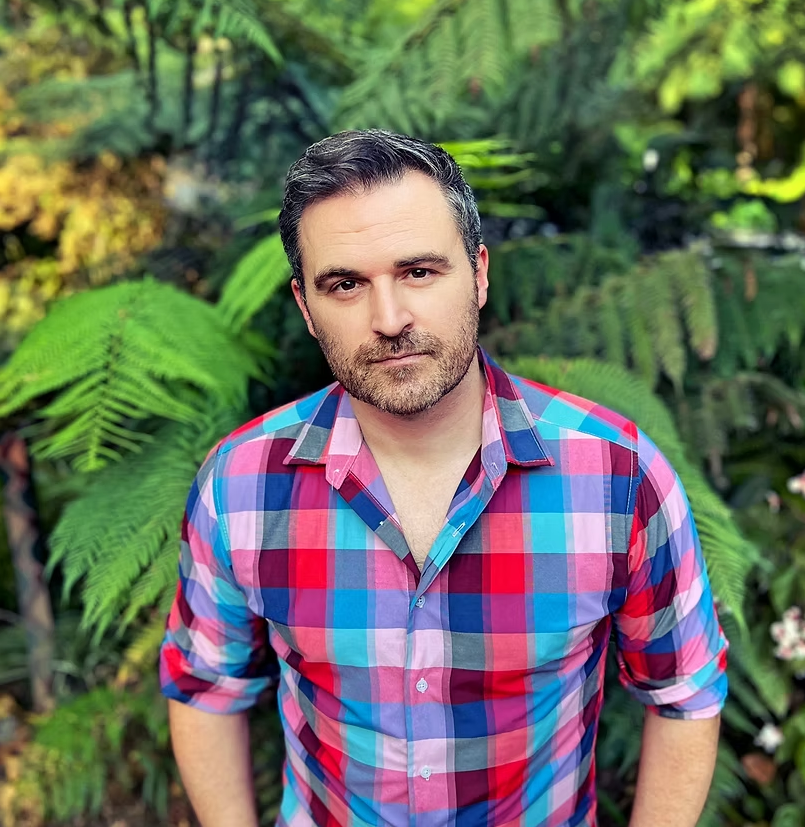
Mark Mupotsa-Russell is a writer living on Wurundjeri Country in the Yarra Ranges. His debut novel, The Hitwoman’s Guide to Reducing Household Debt, won the 2023 Affirm Press Mentorship Award. Before writing novels he was a screenwriter, film reviewer, cocktail columnist, PR consultant and communications adviser in the suicide prevention sector. He lives among the trees with his art therapist superstar wife, hilarious son and a moodle majestically named ‘Mufasa’.
Q&A

Congratulations on the publication of The Wolf Who Cried Boy. How did writing your second novel compare to your first?
Thanks so much! The Hitwoman’s Guide to Reducing Household Debt was the first novel I had published, but I’d written a bunch of manuscripts and screenplays beforehand. I think that story cut through because I’d finally discovered a method of writing that really worked for me. The best part of writing The Wolf Who Cried Boy was realising that method worked again! Decades of rejection had also taught me not to put all my eggs in one basket, so by the time I had a contract for Hitwoman’s Guide, I’d already written two-thirds of the draft for Wolf.
How did you approach balancing some of the heavy themes of the book (e.g. intimate partner violence, abuse of power, weaponising mental illness) with a child’s point of view?
I love mixing genres and walking the line between comedy and tragedy, or propulsive thrills and big emotion. It was a tricky juggling act, but I found the key was staying completely in six-year-old Henry’s perspective. Because of the fairytale world his mother has created, Henry sees magic all around him. This meant that any time things got too heavy, I could escape into his wonder. At the same time, I could look at these issues from a new angle, asking what message young boys take from stories about superhero men saving the world by punching out bad guys.
Lexi tells Henry a fairytale to help him understand their situation in an age-appropriate way, but things unravel when he discovers the fairytale is not true. How did you navigate writing such morally complex choices for her?
I think the modern world makes it very hard to pick a clear ‘good’ path – we have so much information about how every choice we make could do harm. Lexi is in an impossible situation from the start, so I just tried to be honest about her reactions. She often has to choose the better of two evils, then that choice has consequences, which creates a new moral dilemma. These shades of grey also helped to compare and contrast with the black and white ‘goodies’ and ‘baddies’ idea Henry has taken from superhero stories.
The themes of corruption and institutional power feel particularly resonant given recent controversies regarding police. What do you believe is the role of fiction in exploring this social issue?
I think fiction will always struggle to give clear or helpful answers for issues like this. Even if the situation is presented with complete reality, once readers know the story is classed as fiction, we’ll tell ourselves the real world is different – often because we don’t want to believe our society could let this happen. Instead of giving answers, I think fiction is best at providing new and better questions. It can make us sit back, look at a related experience we’ve had – or our society as a whole – and maybe explore our role in the problem.
Now that The Wolf Who Cried Boy is published, what are you working on next? Any clues you can share about your upcoming projects, or their themes?
I’m currently working on a crime trilogy. I can’t give too much away but I definitely think some of the common themes from my first two books will creep in – morality, masculinity, gender roles, male violence – as well as a few new ones, like how learning about these issues can shape someone’s coming-of-age. I’m excited for it!
The Wolf Who Cried Boy is out now through Affirm Press.
Support the Show
Has Novel Feelings entertained you, or taught you something? Show your support with a once-off donation by buying us a coffee. All proceeds go towards making the show stronger and more sustainable for the future.
We record our podcast on Wurundjeri Land, which is home to both of us in Naarm/Melbourne. We also acknowledge the role of storytelling in First Nations communities. Always was, always will be Aboriginal Land.
 Novel Feelings