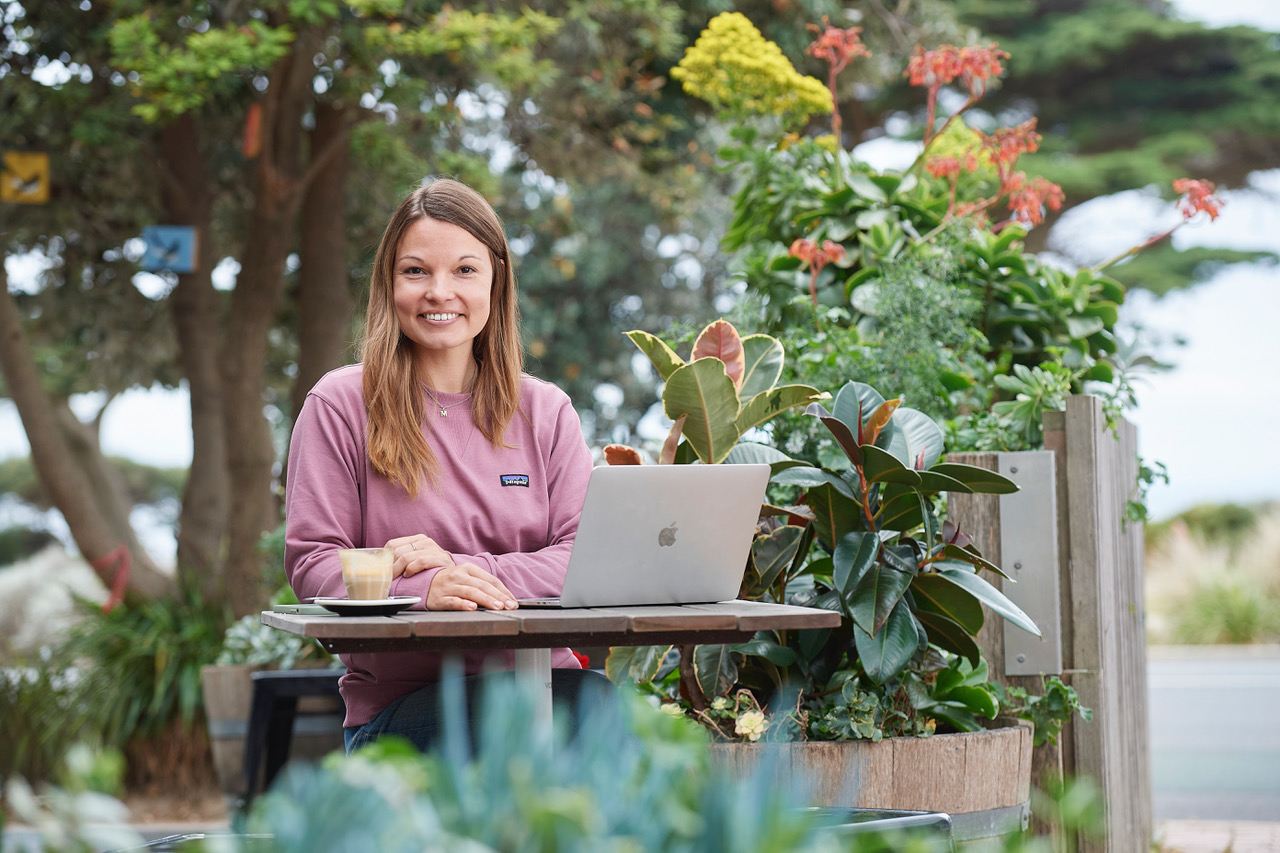
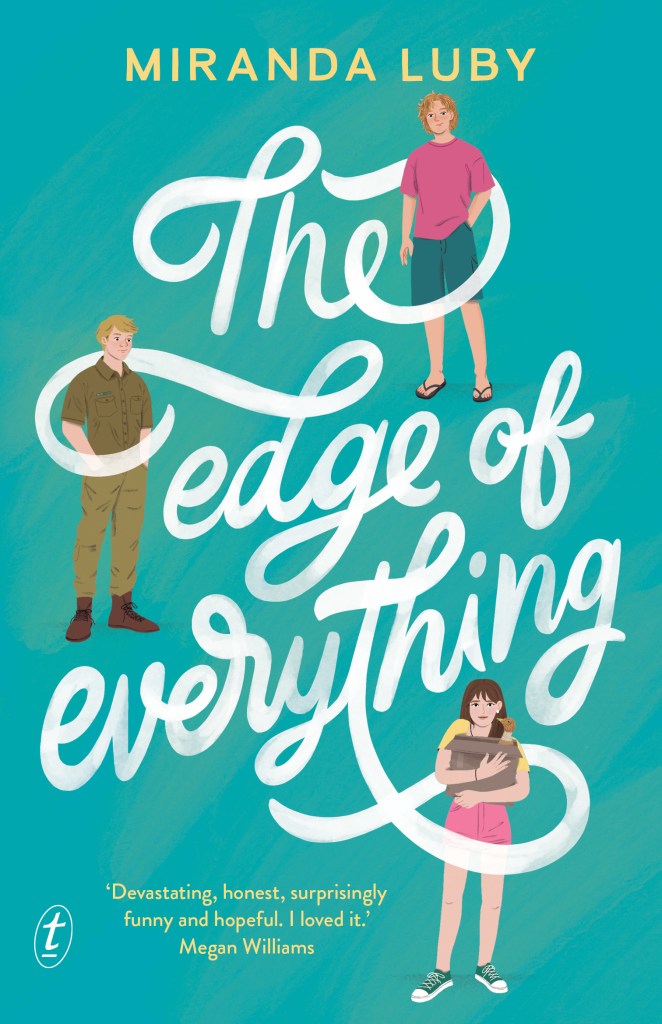
Miranda Luby’s new novel The Edge of Everything is a heartfelt portrayal of grief, a tender romance, and a tribute to a very special Australian bird.
Miranda is an author, journalist, copywriter and animal lover living on Victoria’s Surf Coast. She has won several awards for her short stories, and her journalism features in publications such as National Geographic, BBC Travel and the New York Post. Miranda was shortlisted for the Text Prize for her debut novel, Sadie Starr’s Guide to Starting Over.
Q&A
Congratulations on the publication of The Edge of Everything. How has your writing evolved since the publication of your first novel, Sadie Starr’s Guide to Starting Over?
Thank you so much! I think since Sadie I’ve felt more confident trying to address challenging, dark and philosophical themes while keeping a novel light, readable and even funny. I don’t think I would have attempted this novel without having first written Sadie. On a plot level, I’m slowly overcoming my tendency to wrap everything up in a neat little bow and allowing myself to leave room for ambiguity. I had to for this novel, which really has no definitive answers.
The Edge of Everything has a great cast of characters, including Lucy’s newer and older friends, and her parents. Who was your favourite character to write?
Like with my first novel, the protagonist, Lucy, was my favourite to write. That’s firstly because, being written in first person, I could really delve into her inner world, all her complexities and contradictions, in a way that truly represents the nuance of being a human. Secondly, it’s because Lucy and Sadie are in large part autobiographical, and feeling like you know a character deeply always makes them very enjoyable to engage with for me—like they’re a close friend.
I’ve read a few YA books that look at the immediate aftermath of a loved one’s death, but The Edge of Everything is quite unique as it looks at longer term grief and Lucy’s difficulties adjusting back to ‘normal’ life. What did you want to highlight to readers about grief and coping?
I wanted to highlight the more taboo, existential side of grief that Lucy is struggling with. I think the questions she is asking about meaning and life are very common for teenagers (and adults)—especially in a world of increasing uncertainty about the future—and I wanted to give readers the language to ask and answer some big philosophical questions without feeling like they’re being too nihilistic or depressing.
In The Guardian you recently shared a story about your own brush with death, and the impact of losing a friend when you were younger. In the novel, Lucy’s brother has the same cause of death. What was your experience like, sharing this part of your own story through Lucy?
It was very cathartic and meaningful sharing this part of my life through Lucy. My friend’s death brought up questions I have now been thinking about for a long time, and to try to answer them through a version of myself in a fiction environment was powerful. I felt so much compassion for Lucy and was proud of the way she dealt with her struggles in the end.
How did you approach balancing some of the heavy themes of the book (e.g. grief, existentialism) with the lighter elements, like teen romance?
This came quite naturally to me because I do think real life is a constant kaleidoscope of thoughts, emotions and experiences. One minute you’re thinking about the meaning of it all and the next you’re trying to choose the cutest top for a date—that’s how my brain works, anyway. We are rarely ever thinking just one thing or having just one experience, and all of our darkest times will be cushioned by lightness if we look for it. I really wanted to represent that on the page.
I understand that you share Lucy’s love of animals, and the sanctuary featured in the story was informed by some of your own experiences working for Zoos Victoria. What would you like young readers to take away regarding environmental conservation and endangered species?
We live in a really hard time to be a conservationist or animal-lover. Sometimes the devastation the natural world is experiencing can feel overwhelming and insurmountable. I wanted young readers to realise that it’s not their job to solve the world’s problems, that even small acts of compassion and kindness mean something, even amidst great suffering and pain, and that saving one bird—even if you might not be able to save the whole species—is a beautiful, meaningful and worthwhile thing.
The Edge of Everything is out now through Text Publishing.
Click here to listen to our previous interview with Miranda on Sadie Starr’s Guide to Starting Over.
Support the Show
Has Novel Feelings entertained you, or taught you something? Show your support with a once-off donation by buying us a coffee. All proceeds go towards making the show stronger and more sustainable for the future.
We record our podcast on Wurundjeri Land, which is home to both of us in Naarm/Melbourne. We also acknowledge the role of storytelling in First Nations communities. Always was, always will be Aboriginal Land.
 Novel Feelings