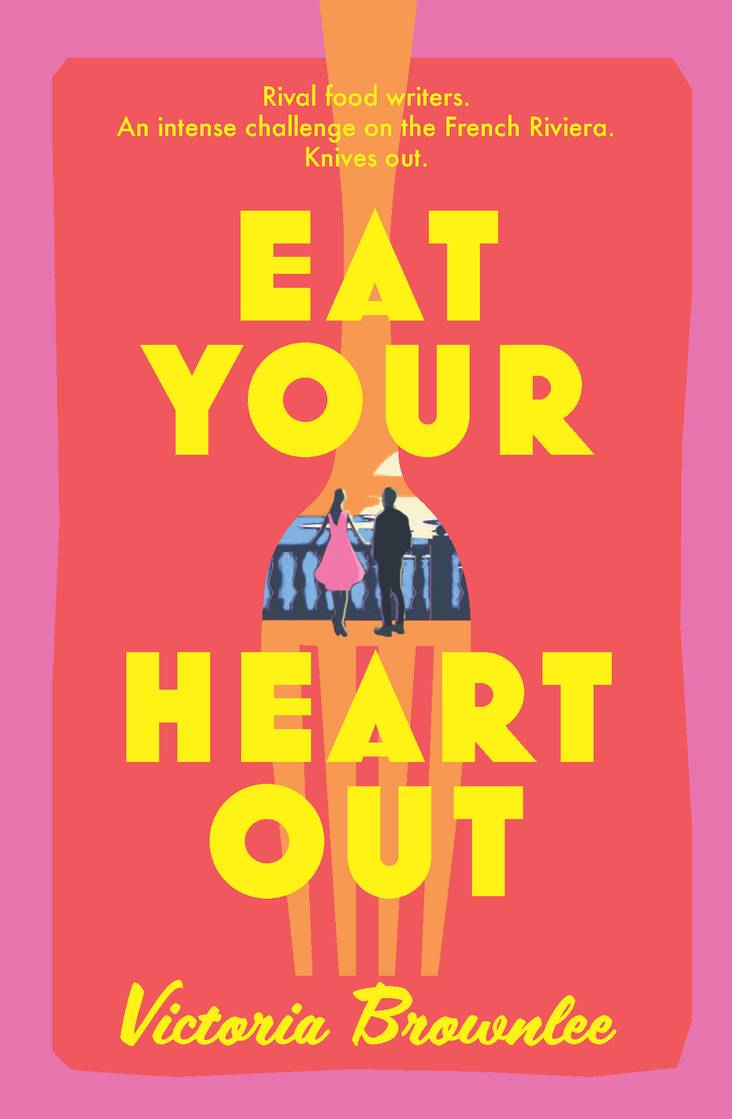
Chloe Bridgers, Australian food blogger in Paris, has landed an interview to write the tell-all memoir of controversial celebrity chef Carla Duris. The only catch? To nab the role, she has to compete against a group of cut-throat, world-class food writers during a weekend-long job interview at the Duris family villa on the glistening Côte d’Azur.
Already feeling like a fish out of water, Chloe starts to worry that old-school French journalist Henri de la Fontaine has been sabotaging her from the get-go. But is winning the only thing he has in mind?
As the weekend unfolds, interviewees are seemingly sent packing at random and tensions among those remaining boil over. Does Chloe have what it takes to land the job, or will she become the next casualty in the fight to write for Madame Duris?
Review
Spoilers ahead!
There are elements of Eat Your Heart Out that are highly enjoyable for someone like me – that is, someone who enjoys food and watches quite a bit of Masterchef. You can tell the author of this book, Victoria Brownlee, has experience in the culinary industry. The descriptions of food were mouth-watering, and the insights to the world of food critics is intriguing. There is also romance and mystery in the story, both of which are my favourite things. Unfortunately, I leave the book largely feeling uncomfortable by the characterisation of Carla Duris, the controversial and mysterious chef, and the words used to describe her.
The story revolves around a lengthy job interview process where several food writers compete for the chance to write Carla’s tell-all memoir. Carla, the famous chef and a daughter of another famous chef, is described as mysterious, mercurial, and pretty awful. (The word ‘psychopathic’ was used.) The narrative suggests that she keeps a tight grip on her reputation by hiring top law firms and an excellent PR team, and is a culinary star despite rumours and legal proceedings involving poor treatment of her staff (ranging from unfair dismissal to sexual assault). She sets challenges for the writers, such as a tennis match, painting, and (later) an unexpected survival challenge. Strange, unpredictable, and over-the-top, to be sure. As the stakes of the story increase, ‘mental’, ‘psychotic’, ‘insane’ were used by the characters to describe their views of Carla’s actions. The story ends with Carla stabbing someone.
We have spoken on the podcast before about the ‘mentally ill people are violent’ trope and how it contributes to stigma and discrimination. Psychosis is often used to explain why a character is behaving strangely, but they are not the same thing. If Carla does suffer from complex mental health issues, I would have liked to see a more nuanced portrayal of that. If she doesn’t, then words such as ‘bizarre’, ‘unreasonable’, and ‘self-absorbed’ would be sufficient to convey the strangeness of her demands and actions.
There are interesting character and plot points in the book. The positioning of Chloe as a food blogger vs Henri the established food critic offered insight into the dynamics of culinary media. Henri’s immediate attraction to Chloe and her being oblivious to it, and his inability to convey his feelings properly, made for fun romantic developments. The competition plot itself was fun, though the raising of the stakes could have been paced more steadily.
Unfortunately, rather than the intriguing world of food critics or the romance between Chloe and Henri, I leave the book thinking about the stigma against people with complex mental illness, and how this intersects with the way villains continue to be portrayed in fiction.
Thank you to Affirm Press who provided a copy of the novel in exchange for a review.
Review by Priscilla
 Novel Feelings