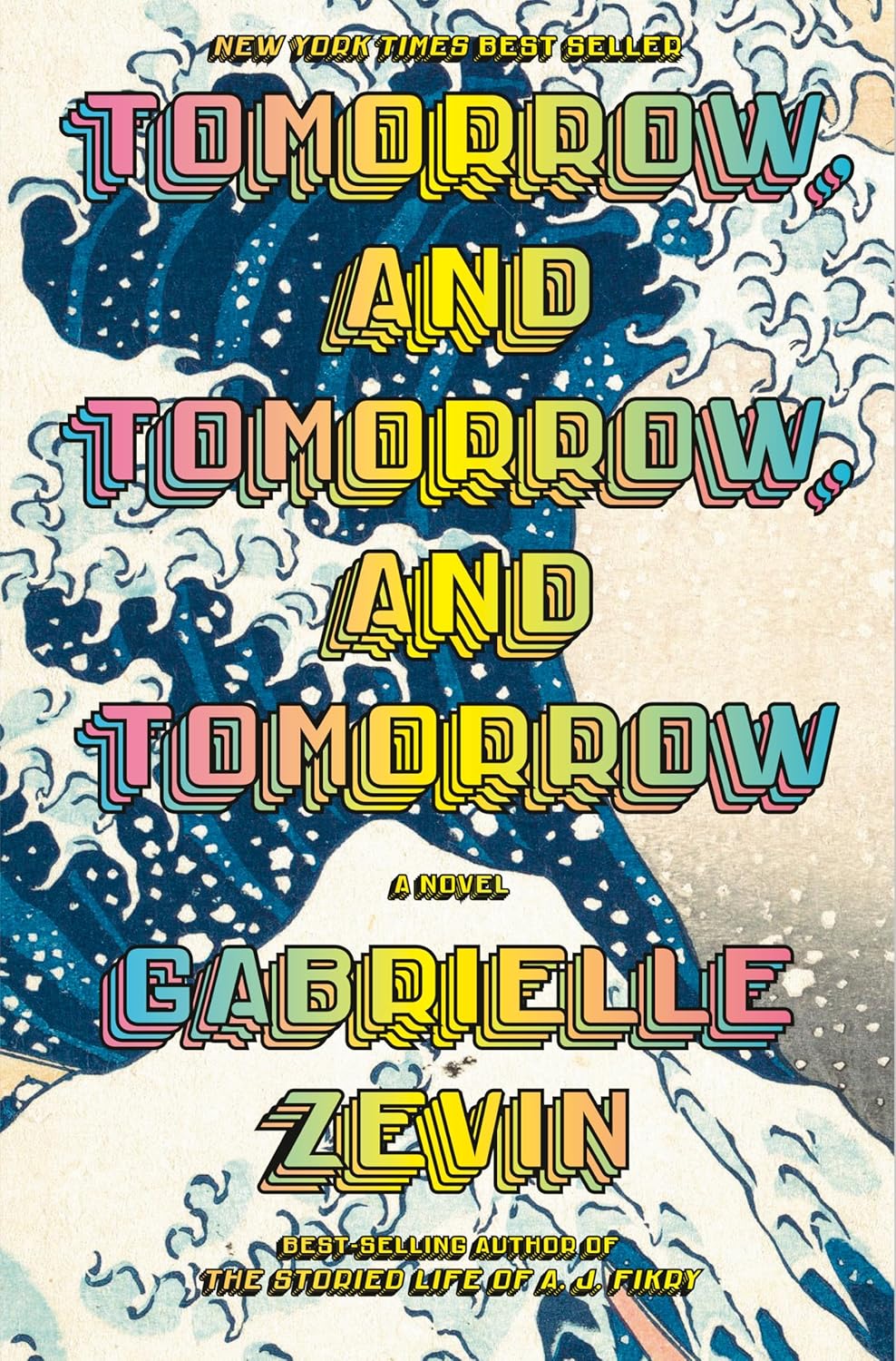
In this exhilarating novel, two friends—often in love, but never lovers—come together as creative partners in the world of video game design, where success brings them fame, joy, tragedy, duplicity, and, ultimately, a kind of immortality.
Join Priscilla and Elise for a book club discussion on Tomorrow, and Tomorrow, and Tomorrow‘s complex characterisation and video game nostalgia, including an in-depth review of topics like depression, disability and chronic pain, grief, race and class.
Content notes for this episode: Mention of characters witnessing a suicide death (minimal detail); mention of war in Gaza; discussion of gun violence, abuse of power in a relationship, and domestic violence.
Buy the book
Thank you to our book club partners, Amplify Bookstore, who are offering 10% off the book (or book club bundle) with the code NOVELFEELINGS10.
Listen to our review
Listen on Apple, Spotify, or your favourite pod player, or stream here.
Join the conversation
Visit our Facebook community page to join in the conversation.
Detailed Show Notes
About the Book
On a bitter-cold day, in the December of his junior year at Harvard, Sam Masur exits a subway car and sees, amid the hordes of people waiting on the platform, Sadie Green. He calls her name. For a moment, she pretends she hasn’t heard him, but then, she turns, and a game begins: a legendary collaboration that will launch them to stardom. These friends, intimates since childhood, borrow money, beg favors, and, before even graduating college, they have created their first blockbuster, Ichigo. Overnight, the world is theirs. Not even twenty-five years old, Sam and Sadie are brilliant, successful, and rich, but these qualities won’t protect them from their own creative ambitions or the betrayals of their hearts.
Spanning thirty years, from Cambridge, Massachusetts, to Venice Beach, California, and lands in between and far beyond, Gabrielle Zevin’s Tomorrow, and Tomorrow, and Tomorrow is a dazzling and intricately imagined novel that examines the multifarious nature of identity, disability, failure, the redemptive possibilities in play, and above all, our need to connect: to be loved and to love. Yes, it is a love story, but it is not one you have read before.
About the author

GABRIELLE ZEVIN is a New York Times best-selling novelist whose books have been translated into forty languages. Tomorrow, and Tomorrow, and Tomorrow is her tenth novel.
Gabrielle began her writing career, at age fourteen, as a music critic, and has occasionally written criticism for the New York Times NPR. She is also the screenwriter of Conversations with Other Women.
Our Thoughts
We both found Tomorrow, and Tomorrow, and Tomorrow to be a compelling novel, and appreciated the complex personalities and motivations of the main characters and their epic, platonic friendships (including building empathy for characters who hurt others in various ways throughout the book). The novel holds a special brand of nostalgia for those with fond memories of 90s/00s video games, but will possibly spark interest even for readers who are not gamers.
Whilst not a ‘mental health book’, the book masterfully covers a range of psychological themes, in particular depression and grief, including intersections with race, class, and disability. While we had some gripes with some aspects of the book (including a particular section on cultural appropriation, and the tendency to skip over important moments and only reference them in retrospect), as a whole, it’s a beautiful, emotional read.
Book Club Discussion Questions
Visit our Facebook community page to join in the conversation.
- Tomorrow, and Tomorrow, and Tomorrow has a strong focus on (mostly) platonic friendships. What are some other examples of adult fiction with a central focus on friendships rather than romantic relationships?
- We had mixed to negative feelings about Sam’s interview speech on cultural appropriation. What did you think of his opinions on the topic?
- Did this book challenge any ideas you had about depression, grief, disability, or any of the other psychological themes in the book? Or were there any elements of their representation that resonated with you?
- Nostalgia is a huge theme in recent creative media targeting millennials – not just video games, but also toys (e.g. Barbie), reboots of TV shows (e.g. Gilmore Girls and Sex and the City) and even musical reunions (e.g. Oasis). What do you think about this trend?
- Due to time, we edited out some discussion about the absence of any therapy in the book – this is only briefly mentioned as an option for the characters once or twice. We speculated about whether this might be due to the time period, lack of mental health literacy, stigma of help-seeking, or a simple case of the ‘there are no therapists’ trope. Is this something that ever stands out to you in fiction – or are we just biased because of our profession?
Resources
- The relationship between depression and bereavement
- Chronic pain and mental health
- Dispelling common misconceptions about grief
Support the Show
Has Novel Feelings entertained you, or taught you something? Show your support with a once-off donation by buying us a coffee. All proceeds go towards making the show stronger and more sustainable for the future.
We record our podcast on Wurundjeri Land, which is home to both of us in Naarm/Melbourne. We also acknowledge the role of storytelling in First Nations communities. Always was, always will be Aboriginal Land.
 Novel Feelings
One thought on “January book club: Tomorrow, and Tomorrow, and Tomorrow (S4E1)”